Ort English Online Work

  • English Home
  • Online Grammar
  • Online Literature
  • Book Reports/Projects
  • Module G & C - Writing
  • Oral Bagrut
  • Workbooks
  • Present Tenses
  • Past Tenses
  • The Conditionals
  • Relative Pronouns
  • Mechanics
  • The Road Not Taken
  • As I Grew Older
  • The Wave
  • Rules of the Game
  • A Summer's Reading
  • Mr Know All
  • Thank You Ma'am
  • The Treasure of Lemmon Brown
  • Count That Day Lost
  • The Caged Bird
  • Inherit the Wind
  • The Enemy


Background Information

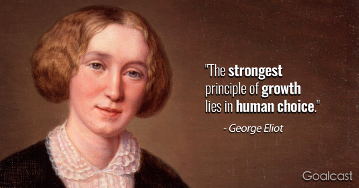
The Poet - George Eliot
 (1819 – 1880)


George Eliot was an English female writer and poetess. She lived in England during the Victorian Age in Queen Victoria’s times. 

George Eliot, whose given name was MaryAnne Evans, was born during a time when women authors were only beginning to use their female names, rather than use male pen names to protect their gender from the public. Eliot chose to continue the tradition of using a male pen name in the hope of avoiding the stereotypical idea that women could only write lighthearted romance. In addition, she may have done so to shield her somewhat scandalous personal life from public scrutiny. 


As a child Eliot was very intelligent as well as an avid reader. However, she was not considered physically beautiful. Her father, assuming that she would not marry invested in her education (something that was not typically offered to girls during that time in history). Eliot achieved great success academically. However, at the age of 16 her mother died and she was required to return to the family home, ending her formal education. Eliot continued to live with her father and keep house for him until the age of 30 when he passed away.
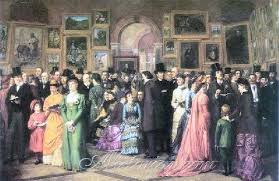
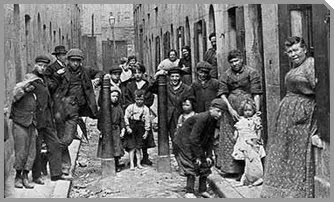

The Victorian Era (1837-1901)


Although the Victorian Age was characterized by peace and prosperity, there were huge gaps between the rich and the poor. The lower classes lived in poverty. Poor children were forced to work hard in order to support their families instead of going to school. Eliot and her friends were openly critical of these conditions. For them, the writer’s job was to help improve society. Their literary works reflected those bad times. Gradually, a sense of responsibility began to develop among the upper classes. They used their money and influence to demand better working conditions and education for the working class. 

The background information puts the poem in a wider social perspective and context and gives insight to the poet's reasons for writing the poem. It deepens our understanding of her writing. The poem implies that society as a whole can be improved if each of us does his or her part – and that it is every person’s responsibility to do so.

Make a free website with Yola